Imagine opening a shop in the middle of a desert. You have the best products, amazing prices, and a beautiful store but nobody knows you exist. That’s what having a website without SEO feels like.
Every single day, people type billions of searches into Google, Bing, and other search engines. They’re looking for answers, products, services, and solutions. SEO Search Engine Optimization is the art and science of making sure your website shows up when those people come looking. In 2026, with AI reshaping the internet faster than ever, understanding how SEO works isn’t optional anymore. It’s essential.
Whether you’re a blogger, a small business owner, or a marketing professional, this guide will break down everything you need to know in plain, simple language.
What is SEO? (A Simple Definition)
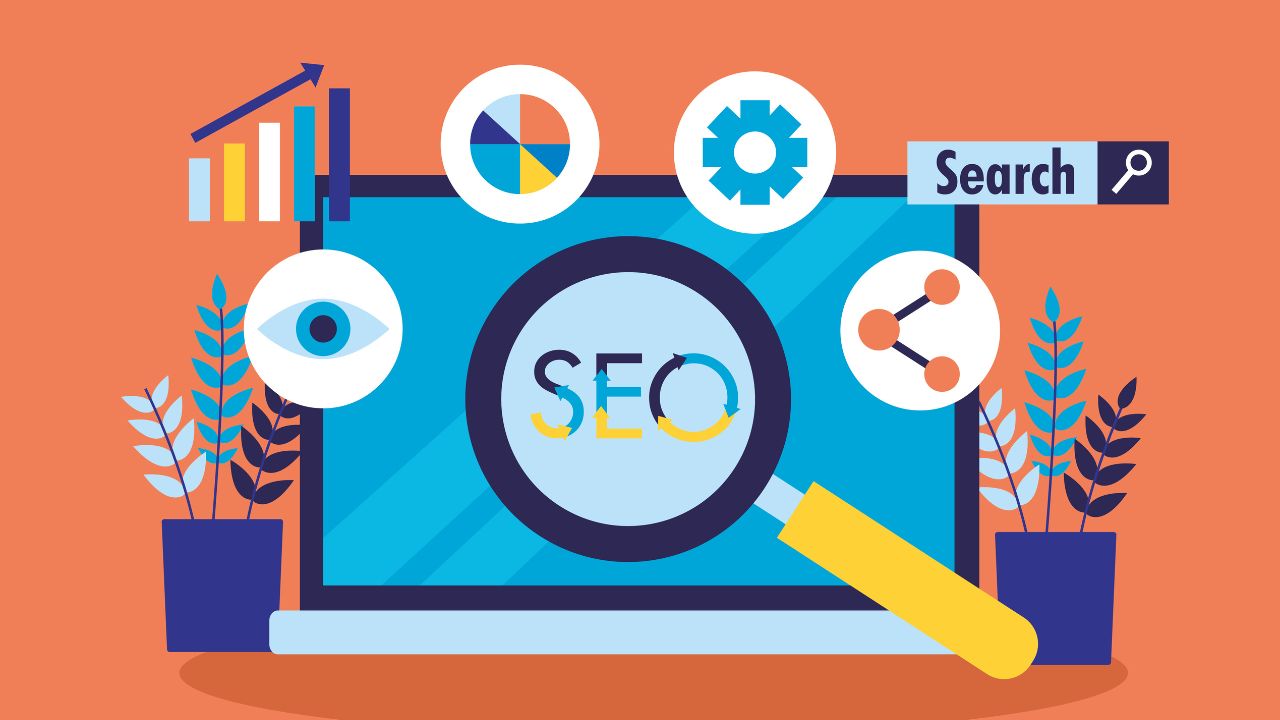
SEO (Search Engine Optimization) is the process of improving your website so it ranks higher in search engine results pages (SERPs). The higher you rank, the more people find you without paying for ads.
Think of Google as a giant librarian. When someone asks a question, the librarian scans millions of books (websites) and picks the most relevant, trustworthy, and easy-to-read ones. SEO is how you convince that librarian your “book” deserves to be on the top shelf.
SEO is not a one-time task. It’s an ongoing strategy that involves:
- Choosing the right keywords people actually search for
- Creating high-quality, helpful content
- Making your website fast and mobile-friendly
- Building trust and authority through backlinks
- Adapting to algorithm updates from Google and other search engines
How Do Search Engines Work?
Before diving into SEO strategies, it helps to understand what’s happening behind the scenes when someone hits “search.”
Search engines like Google use automated programs called crawlers or spiders to browse the internet. Here’s the basic three-step process:
- Crawling
Google sends bots to visit and read your web pages. They follow links from one page to another, collecting data about every page they find.
- Indexing
After crawling, Google stores the information in a massive database called the index. If your page isn’t indexed, it simply won’t appear in search results.
- Ranking
When someone searches for something, Google’s algorithm analyzes hundreds of ranking factors and decides which pages best match the search intent. The most relevant and authoritative pages appear at the top.
In 2026, Google’s ranking algorithm uses advanced AI models (including its Gemini-based Search Generative Experience) to understand context, meaning, and user behavior — not just keywords.
The 3 Pillars of SEO in 2026
Modern search engine optimization rests on three core pillars. Neglect any one of them and your rankings will suffer.
Pillar 1: On-Page SEO
On-page SEO refers to everything you do on your website to make it search-friendly.
Key on-page SEO elements include:
- Title tags — The clickable headline that appears in search results (keep it under 60 characters)
- Meta descriptions — A 160-character summary that tells users what the page is about
- Header tags (H1, H2, H3) — Structure your content with clear headings
- Keyword placement — Naturally include your target keyword in the first 100 words, headings, and throughout the content
- Image alt text — Describe your images for accessibility and search engines
- Internal linking — Link to other relevant pages on your own site
- Content quality — Long-form, well-researched, helpful content consistently outranks thin or generic pages
Practical tip: Before publishing any page, ask yourself: “Does this answer the reader’s question better than anything else out there?” If the answer is yes, you’re on the right track.
Pillar 2: Off-Page SEO
Off-page SEO is about building your website’s authority and reputation across the internet.
The biggest off-page signal? Backlinks — links from other websites pointing to yours. Think of each backlink as a vote of confidence. The more high-quality votes you have, the more Google trusts you.
Effective off-page SEO tactics in 2026:
- Guest blogging — Write articles for reputable websites in your niche
- Digital PR — Get mentioned in news articles, podcasts, and industry publications
- Broken link building — Find broken links on other sites and suggest your content as a replacement
- Social signals — While not a direct ranking factor, strong social media presence drives traffic and earns links
- Brand mentions — Even unlinked mentions of your brand name can boost authority
Real-life example: A small bakery in Delhi started a blog sharing baking recipes. Local food bloggers linked to their articles. Within six months, they ranked #1 for “best sourdough bread Delhi” — without spending a rupee on ads.
Pillar 3: Technical SEO
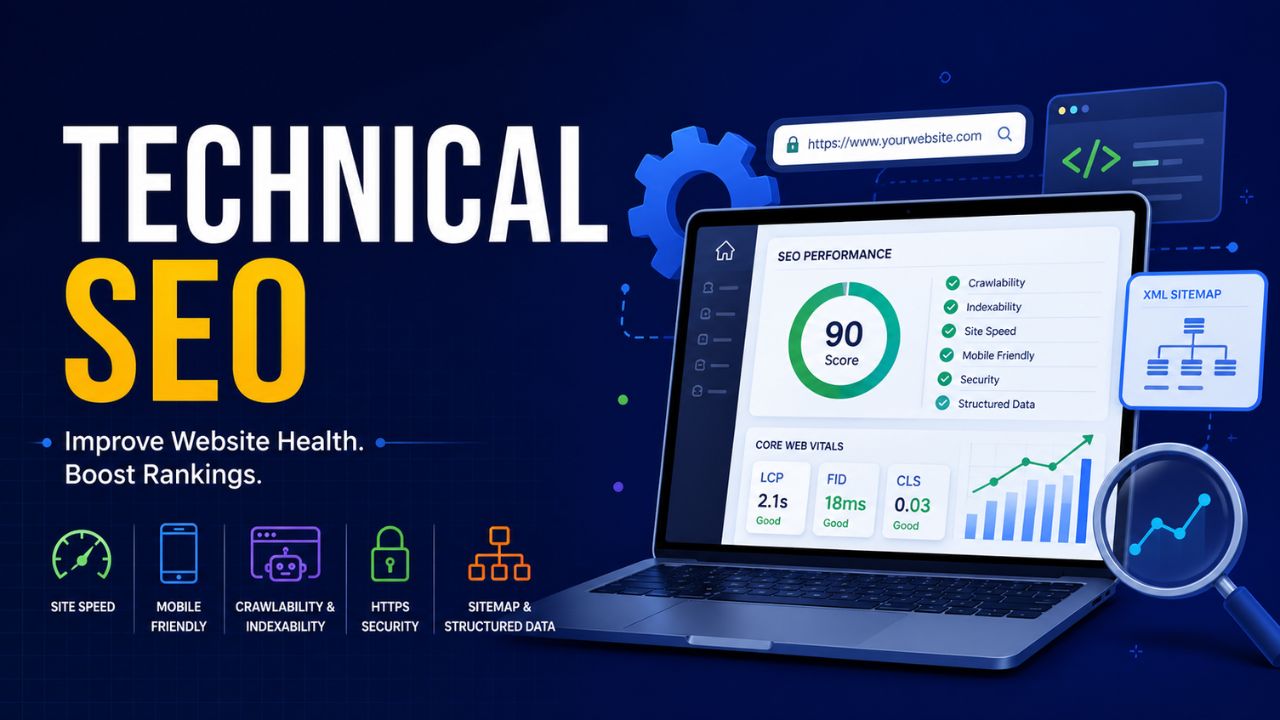
Technical SEO ensures search engines can actually access, crawl, and index your website without problems. It’s the foundation everything else is built on.
Critical technical SEO factors:
- Page speed — Google prioritizes fast-loading pages. Aim for under 2.5 seconds load time
- Mobile-friendliness — Over 60% of searches happen on mobile. Your site must look great on phones
- Core Web Vitals — Google measures real user experience through metrics like LCP, FID, and CLS
- HTTPS security — A secure (SSL) website is a basic requirement in 2026
- XML sitemap — A roadmap that helps Google find and index all your pages
- Structured data (Schema markup) — Helps Google understand your content type and display rich results
- Canonical tags — Prevent duplicate content issues
SEO in 2026: What’s New and What’s Changed?
The SEO landscape has evolved dramatically. Here’s what’s different in 2026 compared to just a few years ago:
AI-Generated Search Results
Google’s AI Overviews (formerly Search Generative Experience) now answers many queries directly at the top of the page. To win in this environment, your content must be comprehensive, authoritative, and structured so AI can pull from it as a source.
Voice Search Optimization
With smart speakers and voice assistants everywhere, optimizing for conversational, question-based queries is more important than ever. People ask: “What’s the best budget laptop under 50,000 rupees?” — not just “budget laptop.”
Tips for voice search SEO:
- Use natural language in your content
- Answer specific questions directly and concisely
Target long-tail keywords that mirror how people speak
E-E-A-T: Experience, Expertise, Authoritativeness, Trustworthiness
Google’s quality guidelines now emphasize E-E-A-T more than ever. Especially for health, finance, and legal topics (known as YMYL — Your Money, Your Life pages), Google wants to see real human expertise.
- Add author bios with credentials
- Cite reputable sources
- Keep your content up to date
Video SEO
YouTube is the second-largest search engine in the world. Embedding videos, optimizing YouTube titles and descriptions, and creating video transcripts can significantly boost your overall SEO performance.
Keyword Research: The Foundation of Every SEO Strategy
You can’t optimize for SEO without knowing what words your audience actually uses. Keyword research is the process of finding those terms.
Types of keywords to target:
| Keyword Type | Example | Search Volume | Competition |
| Short-tail (head) keyword | “SEO” | Very High | Very High |
| Mid-tail keyword | “what is SEO” | High | Medium |
| Long-tail keyword | “how does SEO work for small businesses” | Lower | Low |
Best free keyword research tools in 2026:
- Google Keyword Planner
- Google Search Console
- Ubersuggest
- AnswerThePublic
- Ahrefs Free Tools
Pro tip: Long-tail keywords are gold for beginners. They’re easier to rank for, and people searching them often have higher purchase intent.
Local SEO: Dominating Your Neighborhood
- If you run a local business, local SEO can be your most powerful growth tool.
Local SEO helps you appear in Google’s “Map Pack” — those three business listings that show up when someone searches “dentist near me” or “best chai cafe in Connaught Place.”
Local SEO checklist:
- Claim and optimize your Google Business Profile
- Get consistent NAP (Name, Address, Phone) info across all directories
- Collect genuine customer reviews
- Use location-specific keywords on your website
- Build local backlinks from community sites, local newspapers, and business directories
Content Marketing and SEO: The Perfect Partnership
Content is the fuel that powers SEO. Without valuable content, you have nothing to optimize.
The best content formats for SEO in 2026:
- Long-form guides (like this one!) — 1,500–3,000 words
- How-to articles and tutorials
- Comparison posts (“X vs Y”)
- Listicles (“Top 10 SEO Tips”)
- Case studies with real data
- FAQ pages
The key content rule: Write for humans first, search engines second. If your readers love it, Google will too.
Common SEO Mistakes to Avoid
Even experienced marketers make these errors. Watch out for:
- Keyword stuffing — Repeating keywords unnaturally. Google penalizes this.
- Buying backlinks — Low-quality paid links can get your site penalized or banned.
- Ignoring mobile users — If your site isn’t mobile-optimized, you’re losing rankings.
- Skipping meta descriptions — These influence click-through rates, which affect rankings.
- Not updating old content — Stale content loses rankings. Refresh it regularly.
Ignoring analytics — If you’re not measuring, you can’t improve.
How Long Does SEO Take to Show Results?
This is one of the most common questions beginners ask. The honest answer: it depends.
- New websites: 6–12 months to see significant organic traffic
- Established websites: 3–6 months for notable ranking improvements
- Highly competitive niches: 12–24 months
SEO is a long-term investment, not a quick fix. But once you start ranking, the traffic is free, consistent, and compounds over time — unlike paid ads that stop the moment you stop spending.
Conclusion
SEO might seem complex at first, but at its heart, it’s simple: help people find the answers they’re looking for, and search engines will reward you for it.
In 2026, the rules have evolved — AI is reshaping search, voice is growing, and user experience matters more than ever. But the fundamentals remain unchanged: create genuinely helpful content, earn trust, and build a fast, user-friendly website.
The best time to start with search engine optimization was yesterday. The second best time is right now.
Ready to grow your organic traffic? Start with a free SEO audit of your website, do your keyword research, and publish your first optimized blog post this week. Small, consistent steps lead to massive long-term results.
FAQ
SEO (Search Engine Optimization) is the process of optimizing a website to improve its visibility on search engines like Google and attract organic traffic.
SEO in 2026 focuses on high-quality content, user experience, Core Web Vitals, AI-driven search, search intent, mobile optimization, and authoritative backlinks to rank higher in search results.
SEO helps businesses increase online visibility, drive targeted traffic, generate leads, improve brand awareness, and achieve long-term growth without relying solely on paid advertising.
The main types of SEO are On-Page SEO, Off-Page SEO, Technical SEO, Local SEO, and Content SEO. Each plays a crucial role in improving search engine rankings.
SEO is a long-term strategy. Most websites start seeing noticeable improvements within 3–6 months, while competitive industries may take longer.